Artificial intelligence / 01
Cells leave messages. AI looks for their traces
IRIS studies cellular signals to understand tissue development.
THIS EDITION’S DISCOVERY / Space
A lunar battery must do more than hold a charge. NASA is testing how it handles extreme temperatures.
Discover how it works ↗Source: NASA
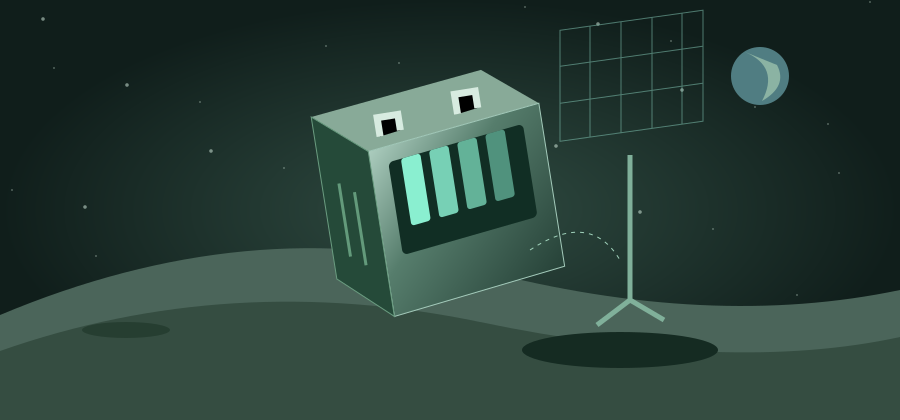
Working in extreme cold.
Surviving it is another challenge.
OPEN A WINDOW ON THE FUTURE
Artificial intelligence / 01
IRIS studies cellular signals to understand tissue development.
Artificial intelligence / 02
Research improves forecasts looking two to six weeks ahead.
Space / 03
A ground experiment studies robotic coordination for orbital cleanup.
A MINUTE TO THINK
They sound alike. They are not. That distinction changes how we should read a battery announcement.
Surviving means it can recover after exposure. Working means it supplies power at that temperature. NASA’s described prototypes needed warming after exposure to −170 °C.
Understand the experiment →MAKE ROOM FOR CURIOSITY
Save stories for later. If you use an RSS reader, follow our new Spanish-language posts in your app.
Copy this address into your RSS reader. No Nexobita account is required.
https://nexobita.pages.dev/feed.xmlOriginal explanations, identified sources and clear limitations. How we work →